

Focus Keyword: Schema Markup for Beginners
SEO Title: Schema Markup Made Simple: Beginner’s Guide to Better SEO Rankings
Meta Description: Learn everything about schema markup for beginners, including how it works, why it matters for SEO, different schema types, and how to implement structured data correctly to improve search visibility.
Have you ever wondered why some websites stand out in Google search results with star ratings, FAQs, product prices, recipes, or event dates while others appear as plain blue links?
The answer is schema markup (also known as structured data).
While schema markup does not directly manipulate search algorithm rankings, it acts as a universal translator between your website’s content and search engine crawlers. When search engines like Google, Bing, and Yandex accurately process your pages, they can display them in richer, interactive formats. These enhanced listings grab user attention, dramatically increase Click-Through Rates (CTR), and establish immediate site credibility.
For many beginners, the term “schema markup” sounds intimidatingly technical. Fortunately, behind the code lies a straightforward concept.
This comprehensive guide breaks down everything you need to know—from how search engine spiders digest webpage entities to practical JSON-LD code templates, step-by-step implementation methods, and critical policy compliance rules to avoid search engine manual penalties.
Table of Contents
- Understanding Schema Markup & Structured Data
- How Search Engines Interpret Unstructured vs. Structured Data
- The Direct & Indirect SEO Benefits of Structured Data
- Core Formats: Why Google Prefers JSON-LD
- The Essential Types of Schema Markup (With Code Examples)
- How to Implement Schema Markup on Your Website
- AdSense & Search Policy Compliance: Avoiding Manual Penalties
- Testing, Validating, and Auditing Your Structured Data
- Frequently Asked Questions
- Final Thoughts & Next Steps
1. Understanding Schema Markup & Structured Data
At its core, Schema.org is a collaborative, open-community activity founded in 2011 by Google, Bing, Yahoo!, and Yandex. Its sole purpose is to create, maintain, and promote a standardized vocabulary for structured data on the internet.
       [ Unstructured Web Page Content ]
                      │
                      ▼
     [ Structured Data / Schema.org Vocabulary ]
                      │
                      ▼
     [ Machine-Readable Semantic Entities ]
                      │
   ┌──────────────────┴──────────────────┐
   ▼                                     ▼
[ Rich Results in SERPs ]    [ AI Knowledge Graph Mapping ]
What is “Structured Data”?
Computers process text differently than human beings. When a human views a web page, they instantly understand context through visual cues, layout positioning, font formatting, and lifelong comprehension.
A search engine web crawler, however, sees string data. To a machine, the text Apple could refer to:
- A nutritious fruit.
- A trillion-dollar technology company based in Cupertino.
- A record label founded by The Beatles.
Structured data is information organized in a pre-defined, standardized schema format. By attaching explicit micro-labels to key elements on a web page, you remove ambiguity, allowing search engines to categorize web entities accurately.
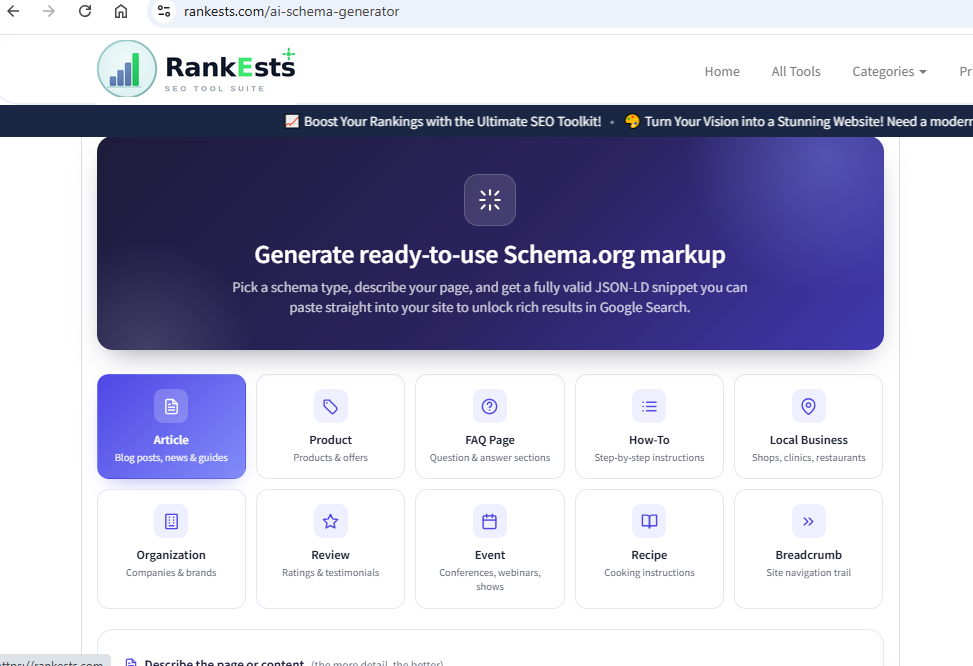
2. How Search Engines Interpret Unstructured vs. Structured Data
To understand the practical necessity of schema markup, consider how a web crawler processes an e-commerce product page with and without structured data.
| Content Element | Unstructured View (Standard HTML Text) | Structured View (JSON-LD Semantic Data) |
| Product Title | Read as an <h1> heading string: "Ergonomic Desk Chair" | Explicitly declared as @type: "Product", name: "Ergonomic Desk Chair" |
| Pricing | Read as plain text: "$299.00" (Could be a price, a discount, or a shipping fee) | Explicitly labeled as offers.price: "299.00", offers.priceCurrency: "USD" |
| Customer Reviews | Read as static text strings and image files | Declared as aggregateRating.ratingValue: "4.8", aggregateRating.reviewCount: "142" |
| Availability | Text stating "Only 3 left in stock" | Labeled using machine-readable standard: offers.availability: "[https://schema.org/InStock](https://schema.org/InStock)" |
The Entity Knowledge Graph
Modern search engines operate on an Entity-Based Search Engine Model rather than simple keyword matching. Google constructs vast Knowledge Graphs that connect people, places, organizations, products, and concepts.
Implementing schema markup feeds directly into Google’s Knowledge Graph, cementing your website’s identity, brand ownership, and domain authority.
3. The Direct & Indirect SEO Benefits of Structured Data
A common question among webmasters is: Does adding schema markup directly raise my ranking position on Google?
Google’s official stance is clear: Schema markup is not a direct algorithmic ranking factor. However, it provides substantial indirect SEO advantages that influence search performance and organic traffic growth.
[ Improved Schema Implementation ]
               │
               ▼
   [ Enhanced Search Features / Rich Snippets ]
               │
               ▼
   [ Higher Visual Prominence on SERP ]
               │
               ▼
   [ Increased Click-Through Rate (CTR) ]
               │
               ▼
   [ Stronger Organic Traffic Growth ]
Key Advantages of Implementing Schema:
- Earning Rich Results (Rich Snippets): Standard search results consist of a blue title, a green/grey URL, and a meta description snippet. Rich results display supplemental data like review stars, pricing, stock levels, FAQ accordions, prep times, and thumbnail images.
- Elevated Click-Through Rates (CTR): Visual prominence draws the eye. Studies consistently indicate that search listings featuring rich snippets capture significantly higher CTRs compared to standard text listings directly above or below them.
- Enhanced Voice Search & Conversational AI Performance: Voice assistants (such as Google Assistant, Siri, and Alexa) rely heavily on structured entities to formulate concise direct answers when responding to voice queries.
- Preparation for Generative AI Search: As AI-driven search experiences digest web content, structured data ensures machine learning algorithms properly summarize and reference your site as a primary source.
4. Core Formats: Why Google Prefers JSON-LD
Historically, structured data was added directly inside page markup using HTML attributes. Today, Schema.org supports three main formats, but Google explicitly recommends JSON-LD.
1. JSON-LD (JavaScript Object Notation for Linked Data) — Recommended
JSON-LD is a clean block of JavaScript inserted inside a <script> tag within the HTML <head> or <body> of a page.
- Advantage: It completely separates the structured data layer from the visual design/HTML structure. It is easy to write, programmatically generate, maintain, and audit without breaking page layouts.
2. Microdata
Microdata uses HTML attributes (like itemscope, itemtype, and itemprop) directly embedded within existing HTML tags.
- Drawback: It litters existing HTML markup, makes site maintenance tedious, and easily breaks if web developers alter template code.
3. RDFa (Resource Description Framework in Attributes)
RDFa functions similarly to Microdata by adding attributes to existing HTML elements (such as vocab, typeof, and property).
- Drawback: Highly complex syntax, rarely used in modern technical SEO setups outside of deep linked-data environments.
5. The Essential Types of Schema Markup (With Code Examples)
Choosing the correct schema type is crucial. Below are structural examples using the recommended JSON-LD format.
A. Organization Schema
Helps search engines understand your corporate identity, official logo, brand references, and social media footprints.
JSON
<script type="application/ld+json">
{
  "@context": "https://schema.org",
  "@type": "Organization",
  "name": "Rankests",
  "url": "https://rankests.com",
  "logo": "https://rankests.com/assets/logo.png",
  "sameAs": [
    "https://twitter.com/rankests",
    "https://www.linkedin.com/company/rankests"
  ],
  "contactPoint": {
    "@type": "ContactPoint",
    "telephone": "+1-800-555-0199",
    "contactType": "customer service",
    "areaServed": "US",
    "availableLanguage": "English"
  }
}
</script>
B. Article / BlogPosting Schema
Informs search engine crawlers about editorial headlines, authors, publication dates, and original image assets.
JSON
<script type="application/ld+json">
{
  "@context": "https://schema.org",
  "@type": "BlogPosting",
  "headline": "Schema Markup Made Simple: A Beginner's Guide to Boosting SEO",
  "image": "https://rankests.com/images/schema-guide-banner.jpg",
  "author": {
    "@type": "Person",
    "name": "SEO Editorial Team"
  },
  "publisher": {
    "@type": "Organization",
    "name": "Rankests",
    "logo": {
      "@type": "ImageObject",
      "url": "https://rankests.com/assets/logo.png"
    }
  },
  "datePublished": "2026-07-21",
  "dateModified": "2026-07-21",
  "description": "Learn everything about schema markup for beginners, including JSON-LD implementation and practical testing strategies."
}
</script>
C. FAQ Schema
Allows site owners to display question-and-answer accordions directly beneath their search engine listing.
JSON
<script type="application/ld+json">
{
  "@context": "https://schema.org",
  "@type": "FAQPage",
  "mainEntity": [{
    "@type": "Question",
    "name": "Is schema markup a direct ranking factor for Google?",
    "acceptedAnswer": {
      "@type": "Answer",
      "text": "No, schema markup is not a direct ranking factor, but it helps improve visibility and click-through rates by enabling rich results."
    }
  }, {
    "@type": "Question",
    "name": "Which schema format does Google recommend?",
    "acceptedAnswer": {
      "@type": "Answer",
      "text": "Google officially recommends using the JSON-LD format for implementing structured data."
    }
  }]
}
</script>
6. How to Implement Schema Markup on Your Website
Depending on your site architecture and technical resources, you can implement schema markup using three primary methods:
                  [ Choose Implementation Method ]
                                 │
      ┌──────────────────────────┼──────────────────────────┐
      ▼                          ▼                          ▼
[ 1. CMS Plugins ]     [ 2. Manual JSON-LD ]     [ 3. Tag Managers ]
- WordPress / Rank Math - Custom HTML Injection  - Google Tag Manager
- Automated setup       - Complete developer control - Flexible deployment
Method 1: Content Management System (CMS) Plugins
If you are operating on platforms like WordPress, Shopify, or Wix, popular SEO plugins automatically inject compliant JSON-LD into your pages:
- WordPress: Plugins like Rank Math, Yoast SEO, or SEOPress automatically output
Article,Breadcrumb, andOrganizationschemas based on page fields. - Shopify: Built-in theme architectures usually output basic
ProductandOfferschema automatically.
Method 2: Manual JSON-LD Injection
For custom-coded PHP, React, or static HTML websites:
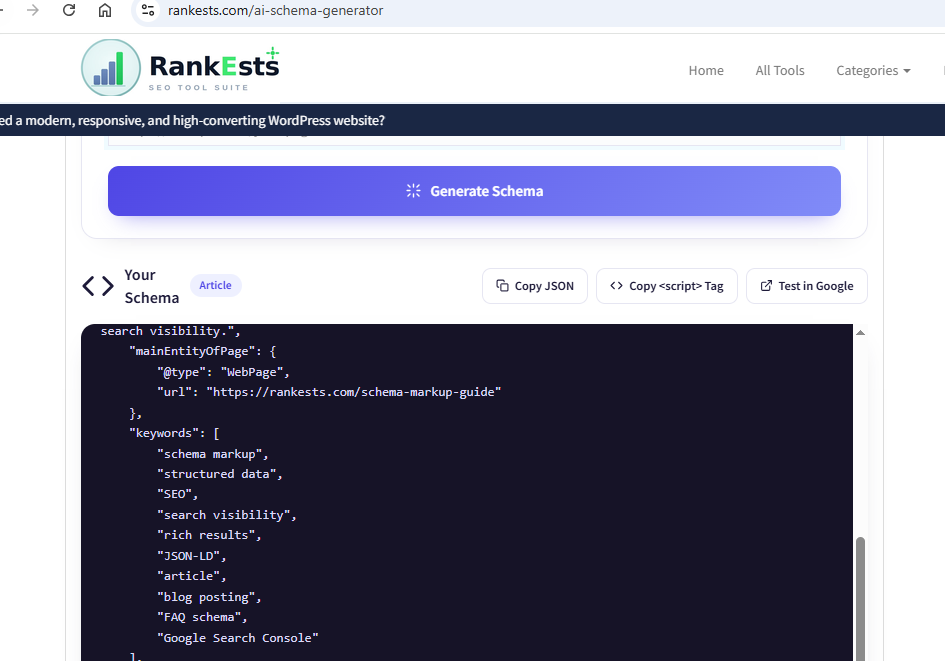
- Generate your target schema using trusted structured data generators.
- Edit the generated script block to ensure all variables accurately match your actual page content.
- Paste the
<script type="application/ld+json">code block directly into the<head>section of your target page file.
Method 3: Google Tag Manager (GTM)
If you do not have direct access to site source code, you can deploy JSON-LD scripts dynamically via Google Tag Manager:
- Create a Custom HTML Tag inside GTM.
- Paste the JSON-LD block into the tag content field.
- Set the trigger to Page View or DOM Ready on targeted URL paths.
7. AdSense & Search Policy Compliance: Avoiding Manual Penalties
Implementing schema markup incorrectly or dishonestly can do far more harm than good. Google actively monitors sites for spammy structured data, which can lead to manual action penalties and account compliance issues under Google AdSense policy guidelines.
Crucial Google Quality Standard: Content contained within structured data markup must precisely mirror the human-visible content present on the web page.
Strict Guidelines to Prevent Policy Violations:
- Never Mark Up Hidden Content: If a star rating, price, or text answer is hidden from human visitors behind tricky CSS (
display:none) or hidden tabs, do not include it in your schema. - Avoid Deceptive Ratings: Generating fake aggregated reviews or hardcoding
5.0star ratings on pages without real customer reviews violates Search Essentials guidelines. - Select the Most Specific Subcategory: Do not use generic schema (
ThingorItem) when a specific sub-schema exists (LocalBusiness,SoftwareApplication,MedicalWebPage). - Avoid Irrelevant Schema Spreading: Applying
Recipeschema to a financial article orProductschema to a basic blog post to trick search engine crawlers is classified as deceptive structured data spam.
8. Testing, Validating, and Auditing Your Structured Data
Never deploy structured data to a live production site without validating the code first. A single missing quotation mark (") or bracket (}) can invalidate the entire JSON-LD script block.
[ Generate/Write Schema ] ➔ [ Google Rich Results Test ] ➔ [ Schema.org Validator ] ➔ [ Deploy & Monitor in GSC ]
Essential Schema Testing Tools:
- Google Rich Results Test: Checks whether your specific JSON-LD implementation is eligible for Google’s enhanced search features (Rich Snippets).
- Schema.org Validator: Validates syntax against global Schema.org definitions, catching syntax errors and structural oversights.
- Google Search Console (GSC): Once your pages are indexed, monitor the Enhancements tab inside GSC. It tracks valid structured data instances and triggers alert notifications if broken markup or syntax errors are discovered on your site.
9. Frequently Asked Questions
Does every single page on my website need schema markup?
No. Focus implementation on pages where rich results deliver high value—such as your homepage (Organization), blog posts (BlogPosting), product pages (Product), services (Service), and help hubs (FAQPage).
Will adding schema markup guarantee that my site receives Rich Snippets?
No. Implementing valid schema markup makes your page eligible for rich results, but Google’s algorithm decides when, where, and how to display those enhanced elements based on search context, device type, and user intent.
Can incorrect schema markup damage my site’s organic traffic?
Yes. Severe implementation errors or spam policy violations can trigger a Google manual action. This can stripped your site of rich result eligibility entirely or suppress your overall search performance.
10. Final Thoughts & Next Steps
Schema markup is one of the most powerful technical SEO strategies available to website owners today. Instead of forcing search engine crawlers to guess what your pages mean, structured data provides precise, machine-readable clarity.
When combined with well-researched, original content and sound technical performance, structured data gives your website a distinct competitive edge on modern Search Engine Result Pages (SERPs).
Action Plan for Beginners:
- Start small by deploying Organization and WebSite schema across your site’s global framework.
- Add Article or BlogPosting schema to your primary blog posts and guides.
- Validate every code snippet using the Google Rich Results Test prior to deployment.
- Keep structured data accurate, visible, and synchronized with your page content over time.
Read more article below: Stop Losing Traffic! 15 Website Audit Mistakes to Avoid





Somebody essentially help to make severely posts
I would state. This is the very first time I frequented
your web page and so far? I surprised with the analysis you made to
make this particular publish amazing. Excellent job!